
Top Operator Errors That Affect the Performance of Nozzle Welders in Saudi Arabia
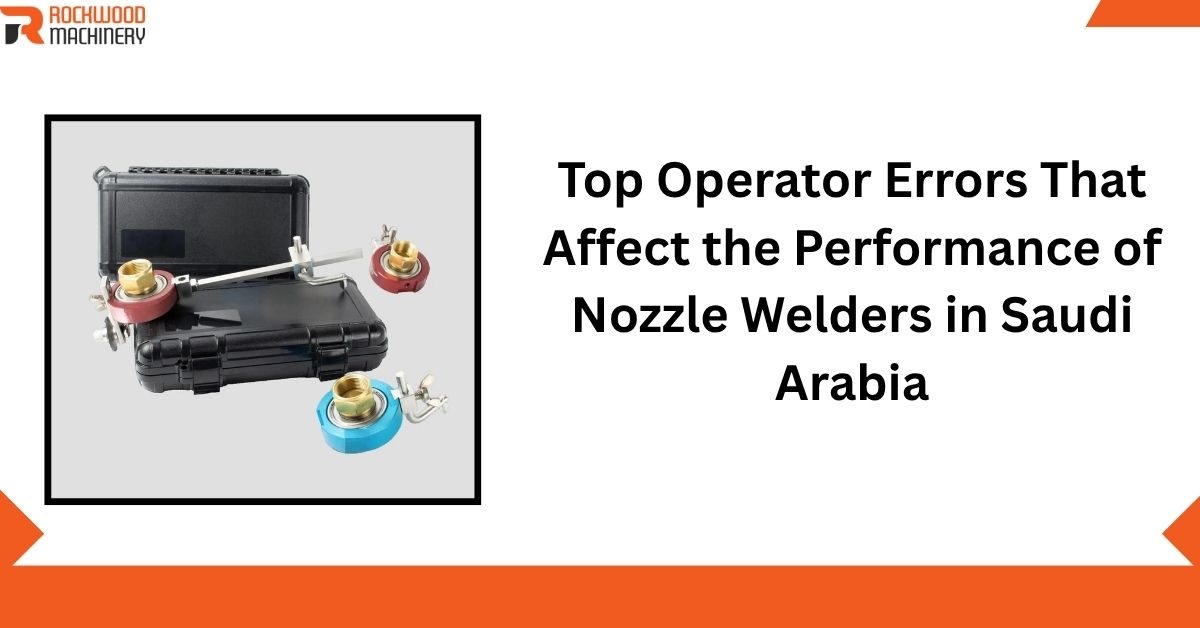
Nozzle welding plays a critical role in pressure vessel fabrication, tank manufacturing, pipeline construction, and heavy engineering projects across Saudi Arabia. Modern nozzle welders help fabricators achieve consistent weld quality, reduce manual effort, and improve production efficiency. However, even advanced equipment can produce poor results when operators overlook key operating practices.
Many welding defects, production delays, and repair costs can be traced back to operator mistakes rather than equipment failure. Understanding these common errors can help fabrication shops maintain high standards and improve overall productivity.
Incorrect Machine Setup Before Welding
One of the most common issues occurs before the welding process even begins. Operators sometimes rush through machine setup to meet production targets. Incorrect alignment of the nozzle and workpiece can create uneven weld beads, poor penetration, and dimensional inaccuracies.
Before starting any welding cycle, operators should verify:
-
Nozzle positioning and alignment
-
Workpiece clamping stability
-
Travel speed settings
-
Welding parameter selection
-
Torch positioning
A few minutes spent on setup can prevent hours of repair work later.
Using the Wrong Welding Parameters
Different materials and thicknesses need specific welding settings. Operators occasionally rely on previous job settings without adjusting parameters for the current application.
Excessive heat input can cause distortion, while insufficient heat may result in weak weld joints. Voltage, amperage, travel speed, and wire feed speed should match the material specification and welding procedure.
Manufacturers of Nozzle Welders in Saudi Arabia provide recommended parameter ranges for specific applications. Following those guidelines helps maintain weld consistency throughout production and reduces the risk of costly welding defects.
Ignoring Regular Equipment Inspection
Some operators focus entirely on production output and overlook basic equipment inspections. Small issues can gradually develop into major welding problems.
Common areas that require regular inspection include:
-
Contact tips
-
Wire feed systems
-
Welding torches
-
Cooling systems
-
Electrical connections
Worn consumables can affect arc stability and lead to inconsistent weld quality. A simple inspection routine before each shift helps avoid unexpected downtime.
Poor Workpiece Preparation
Even the most advanced nozzle welders in Saudi Arabia cannot compensate for poorly prepared surfaces.
Oil, rust, paint, scale, and dirt can contaminate the weld area and create defects such as porosity or lack of fusion. Proper surface cleaning remains one of the most important steps in achieving strong weld joints.
Fabricators should establish clear preparation procedures and ensure operators follow them before every welding operation.
Overlooking Alignment Checks During Production
Initial alignment checks are important, but alignment can also shift during long production runs.
Heavy components, vibration, and repeated handling can cause slight movement in the workpiece. Even a small deviation can affect weld quality and dimensional accuracy.
Experienced operators perform periodic alignment checks throughout the welding cycle, especially when working on large pressure vessels and industrial fabrication projects.
Inadequate Monitoring of Weld Quality
Some operators assume that automated welding equipment will consistently produce acceptable welds without supervision.
Automation improves repeatability, but monitoring remains essential. Visual inspections and periodic quality checks help identify defects before they become larger production issues.
Early detection reduces rework costs and prevents delays in project completion.
Lack of Training on Advanced Features
Modern nozzle welders include advanced functions such as programmable controls, automated positioning systems, and parameter memory settings.
Many fabrication facilities invest in sophisticated equipment but do not provide sufficient operator training. As a result, valuable features remain underutilized.
Training helps operators:
-
Improve productivity
-
Reduce setup time
-
Maintain weld consistency
-
Minimize material waste
-
Improve equipment lifespan
Skilled operators often achieve significantly better results than those relying solely on basic machine knowledge.
Neglecting Preventive Maintenance
Operators frequently notice early warning signs of equipment wear before maintenance teams do. Unusual noises, inconsistent wire feeding, or unstable arc performance should never be ignored.
Reporting these issues immediately can prevent costly repairs and production interruptions.
A preventive maintenance schedule supported by operator feedback helps fabrication facilities keep nozzle welders operating efficiently throughout the year.
Conclusion
High-quality nozzle welding depends on more than advanced equipment. Operator knowledge, attention to detail, and adherence to proper procedures have a direct impact on welding performance. Mistakes such as poor setup, incorrect parameter selection, inadequate workpiece preparation, and neglected maintenance can reduce productivity and increase repair costs.
For fabrication companies seeking reliable Nozzle Welders in Saudi Arabia, selecting quality equipment and investing in operator training are equally important. Many manufacturers also integrate Industrial welding machines in Saudi Arabia into their production lines to improve efficiency and maintain consistent weld quality across demanding applications. When skilled operators work with properly maintained welding systems, manufacturers can achieve stronger welds, improved efficiency, and consistent production results across every project.
To learn more, click: 5 Costly Welding Table Mistakes Saudi Workshops Can Easily Avoid

