
5 Costly Welding Table Mistakes Saudi Workshops Can Easily Avoid
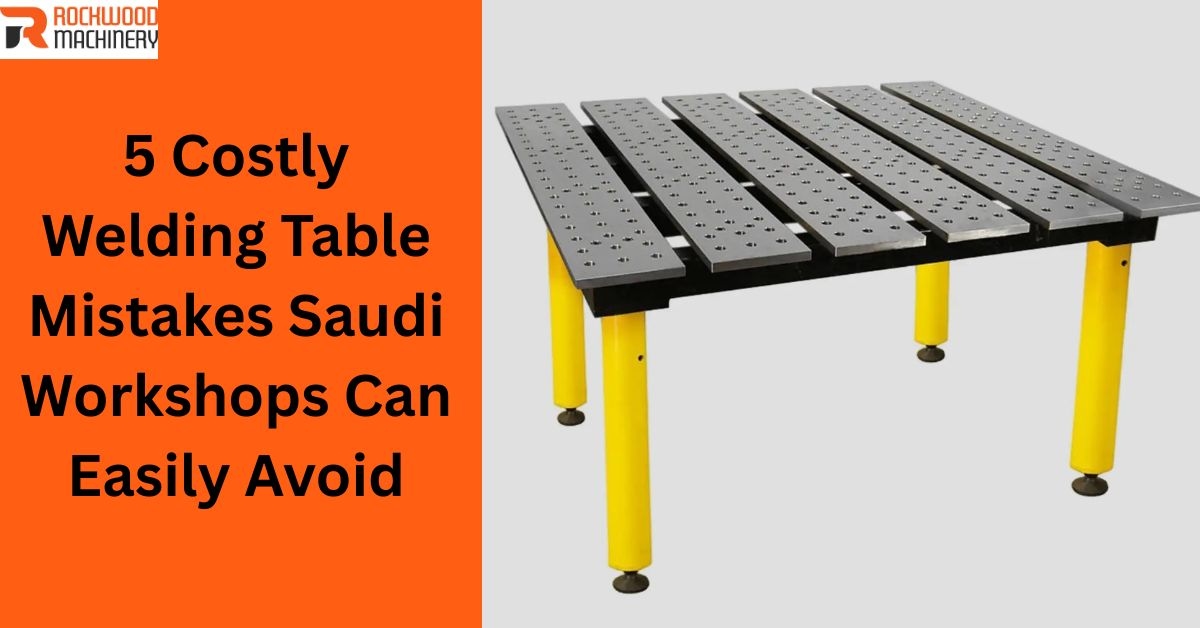
A welding table does more than provide a surface for fabrication work. It supports material alignment, helps maintain accuracy, and creates a safer environment for welders. Many workshops in Saudi Arabia focus heavily on welding machines but overlook the condition and suitability of their welding tables, which directly impact fabrication accuracy and productivity.
Across Saudi Arabia, fabrication companies handling structural steel, pipelines, pressure vessels, and industrial equipment rely on precise welding processes. A poor table setup can lead to misalignment, extra rework, longer production times, and unnecessary expenses.
Here are five common welding table mistakes that can affect productivity and quality, along with practical ways to avoid them.
Choosing a Welding Table That Cannot Handle the Workload
One of the most frequent mistakes is selecting a welding table based only on price or available space. Heavy steel components place significant loads on work surfaces, especially in fabrication shops that process large assemblies.
A lightweight table may appear sufficient at first, but continuous use can lead to surface distortion and reduced stability. Once a table loses its flatness, maintaining accurate positioning becomes difficult.
Selecting the right welding table in Saudi Arabia becomes especially important for workshops handling heavy steel structures, pressure vessels, and large fabrication projects.
Before purchasing a welding table, consider:
-
Maximum workpiece weight
-
Table material thickness
-
Surface flatness requirements
-
Future production needs
Many workshops in Saudi Arabia expand their capabilities over time. Investing in a robust welding table early often reduces replacement costs later.
Ignoring Surface Flatness and Accuracy
Even a small variation in table flatness can affect fabrication quality. Components positioned on an uneven surface may shift slightly during assembly, creating alignment issues that become apparent only after welding is complete.
The cost of correcting these errors is often higher than expected. Additional grinding, cutting, and re-welding consume labor hours and materials.
Regular inspection helps maintain accuracy. Straight edges, measuring tools, and routine checks can identify surface problems before they impact production.
For fabrication projects requiring high precision, modular welding tables with machined surfaces offer better consistency than standard workshop tables.
Overlooking the Importance of Welding Table Accessories
A welding table alone cannot deliver maximum efficiency. Clamps, stops, fixtures, angle brackets, and positioning accessories play a major role in maintaining repeatable results.
Many workshops continue using improvised setups because they seem convenient. Unfortunately, temporary arrangements often create measurement errors and inconsistent weld quality.
Useful accessories may include:
-
Adjustable clamping systems
-
Precision locator pins
-
Corner brackets
-
Workpiece supports
-
Positioning fixtures
These additions reduce setup time and help operators maintain consistent dimensions across multiple jobs.
Poor Maintenance Habits
Welding tables face constant exposure to heat, spatter, dust, and metal debris. Without proper maintenance, surface damage accumulates over time.
A typical scene in many workshops is a table covered with weld spatter and grinding dust. These deposits can interfere with material positioning and make accurate measurements difficult.
Good maintenance practices include:
-
Removing spatter after each project
-
Inspecting for surface damage
-
Cleaning fixture holes regularly
-
Checking clamping components for wear
-
Protecting exposed surfaces when not in use
Routine maintenance requires minimal effort compared with the cost of replacing damaged equipment.
Using One Table for Every Application
Fabrication work varies significantly. A setup suitable for small components may not be ideal for structural steel assemblies or pipe fabrication projects.
Some workshops attempt to handle every task on a single welding table. This approach often creates workflow bottlenecks and compromises efficiency.
Different projects may benefit from:
-
Modular welding tables
-
Heavy-duty fabrication tables
-
Pipe welding stations
-
Mobile welding workstations
-
Specialized fixture tables
Selecting the appropriate table for specific applications improves productivity and allows operators to work more comfortably.
Why These Mistakes Matter
A welding table affects more than convenience. It influences dimensional accuracy, weld quality, operator safety, and production speed.
Workshops that invest in proper welding table systems often experience fewer alignment issues, reduced rework, and smoother fabrication workflows. Accurate workholding and stable setups help fabricators maintain consistent results across projects, especially when handling large or complex assemblies.
A well-planned welding station also reduces setup time, allowing operators to focus on production rather than correcting alignment problems. Over time, these improvements contribute to better productivity and lower operating costs.
Another advantage is consistency. When fabricators work on repeat orders or large-scale projects, reliable table setups help maintain uniform dimensions across multiple components. This reduces quality issues and supports smoother assembly processes.
Final Thoughts
Many fabrication challenges originate long before the welding arc is struck. An unstable surface, inadequate accessories, neglected maintenance, or an unsuitable table can introduce problems that affect the entire project.
As industrial projects continue to expand across the Kingdom, investing in a reliable welding table in Saudi Arabia has become an important step toward achieving consistent fabrication quality and efficient workshop operations. Choosing the right welding tables and accessories, maintaining them properly, and matching them to the application can help workshops improve quality while controlling operational costs. These benefits become even more valuable when integrated with other Steel Fabrication Machinery products in Saudi Arabia, helping workshops streamline production and maintain consistent standards across fabrication projects.
Rockwood Saudi offers welding tables and accessories designed to support modern fabrication requirements. With solutions suitable for a wide range of industrial applications, Rockwood Saudi helps workshops improve accuracy, productivity, and overall welding performance across Saudi Arabia.
To learn more, click: How Automated Welding Starts with the Right Column and Boom Manipulator

