
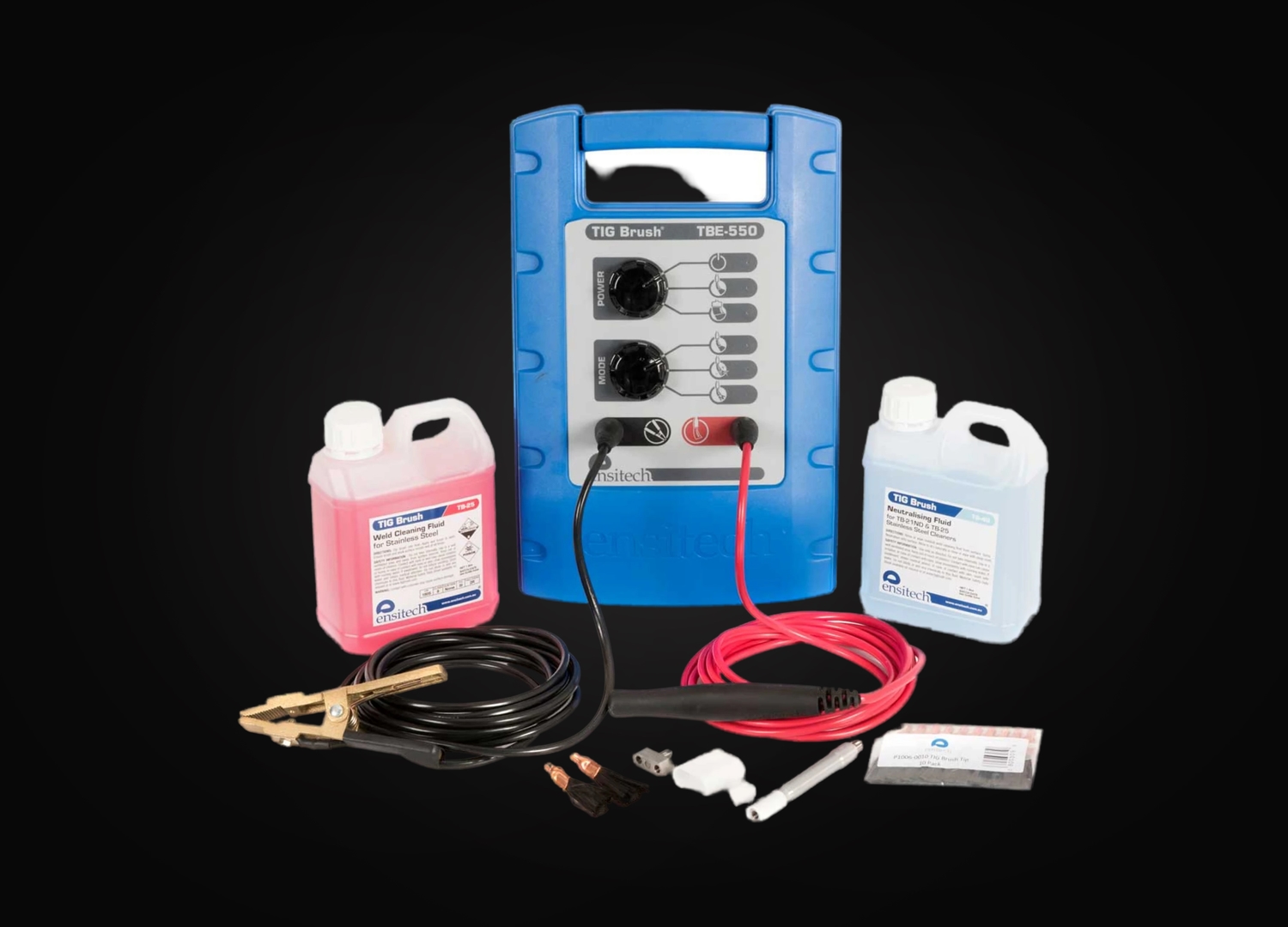
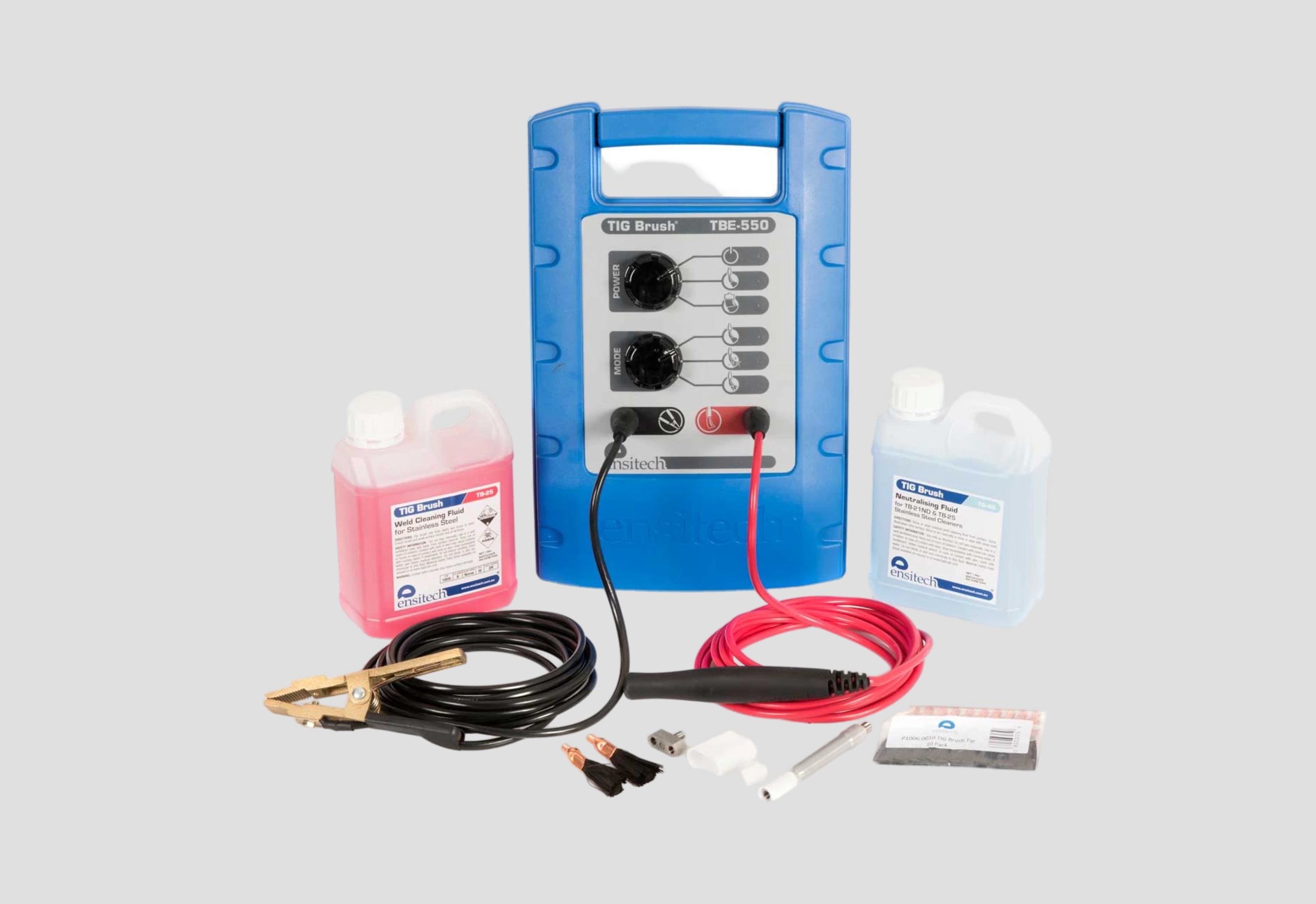
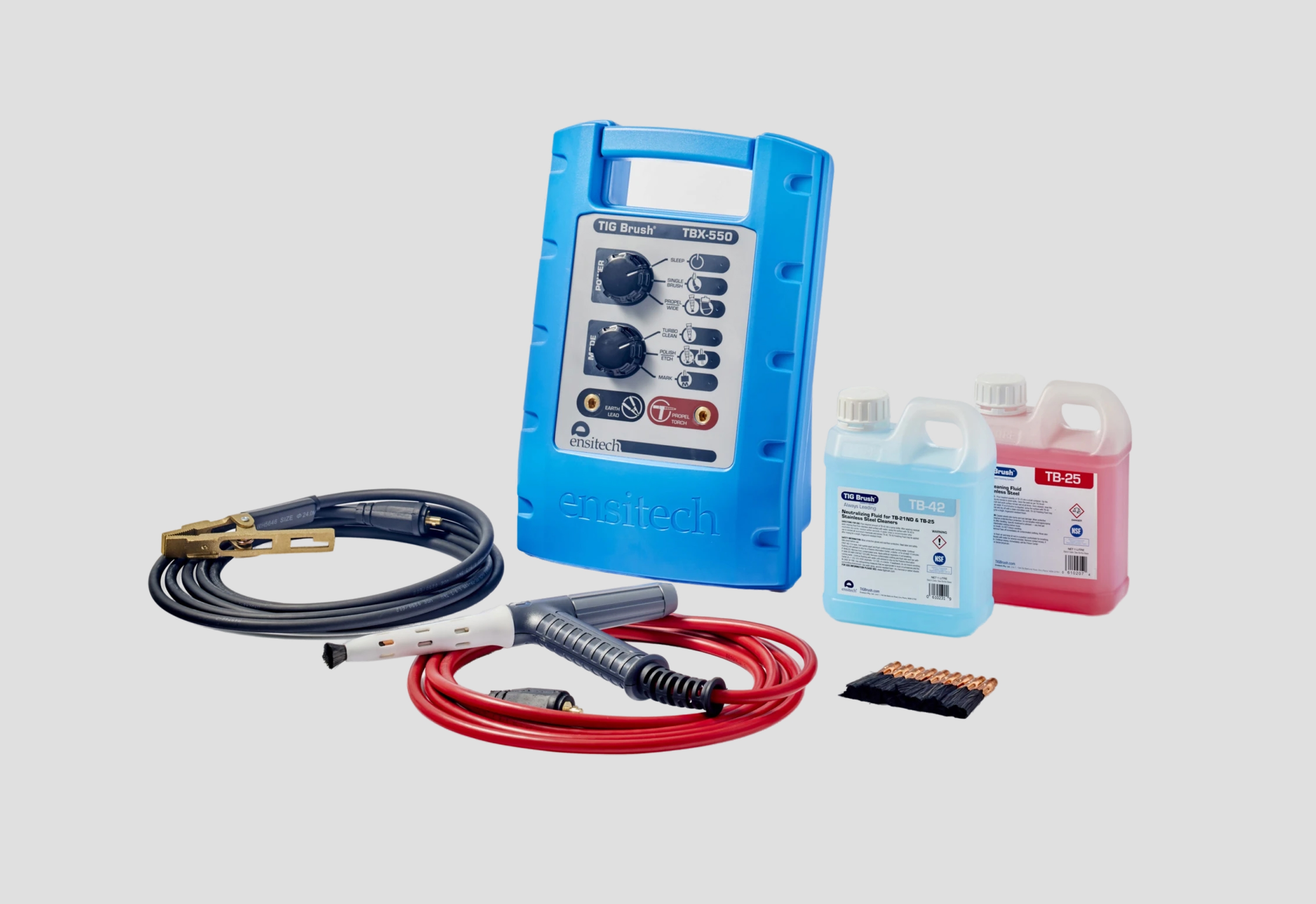
Tig Brush Cleaning Machines in Saudi Arabia
The TIG Brush Cleaning Machine is a stainless steel weld cleaning machine made by Ensitech in Australia. It uses a mix of electricity, heat, and specially formulated cleaning fluids to clean and finish metal surfaces quickly and effectively.
The system features a patented conductive brush that applies the cleaning machines directly to the weld. This creates a fast electrochemical reaction that removes weld discoloration, restores the metal finish, and leaves no damage to the surface.
The TIG Brush cleaning machine is built for tough environments and delivers consistent results even under demanding conditions across Saudi Arabia. It’s widely used for stainless steel cleaning in fabrication, construction, and maintenance work. Switch to advanced Tig Brush Cleaning Machines in Saudi Arabia now.
Step-by-step breakdown of how the TIG Brush works:
-
Electric Current Applied
An electric current runs through the special cleaning brush. -
Brush Dipped in Cleaning Fluid
The brush is dipped into a cleaning fluid designed to remove weld discoloration (iron oxide). -
Brush Applied to Weld Area
The brush is moved across the weld or heat-affected zone on the stainless steel surface. -
Heat Generated at Brush Tip
The current heats the brush tip, raising the temperature of the cleaning fluid. -
Chemical Reaction Activated
The heated fluid reacts with the oxide layer, quickly cleaning the metal surface. -
Safe and Eco-Friendly Process
Unlike pickling paste, the fluid is safer for operators and non-toxic when used correctly.
Chemical Action
The blue and brown marks seen after welding are iron oxide layers, specifically ferrous and ferric oxides. These oxides are weak and break down quickly under the high heat produced by the TIG Brush. As the brush works, ferric ions are released into the cleaning fluid. The fluid holds (or sequesters) these ions, preventing them from re-forming as oxides. Once the brush is removed and the fluid is wiped off, the stainless steel surface is left clean and free of iron oxides.
Surface Improvement (Passivation)
Iron oxide does a poor job of protecting stainless steel from corrosion. Even after cleaning, discolored areas can start corroding if not treated properly. To prevent this, the surface must be passivated.

