
How Welding Studs Improve Efficiency in Metal Fabrication Industries in Saudi Arabia
Saudi Arabia’s metal fabrication industry is growing rapidly with the expansion of infrastructure, oil and gas projects, industrial manufacturing, and construction developments. Modern fabrication companies require fast, reliable, and cost-effective welding solutions to meet production demands while maintaining high-quality standards. One of the most effective technologies supporting this industrial growth is the use of welding studs.
Welding studs play an important role in modern fabrication by creating strong and permanent metal connections quickly and efficiently. Compared to traditional fastening methods such as drilling, bolting, and riveting, stud welding reduces labor time, improves production speed, and delivers excellent structural strength. Industries across the Kingdom are increasingly adopting this technology to improve operational efficiency and reduce manufacturing costs.
What Are Welding Studs?
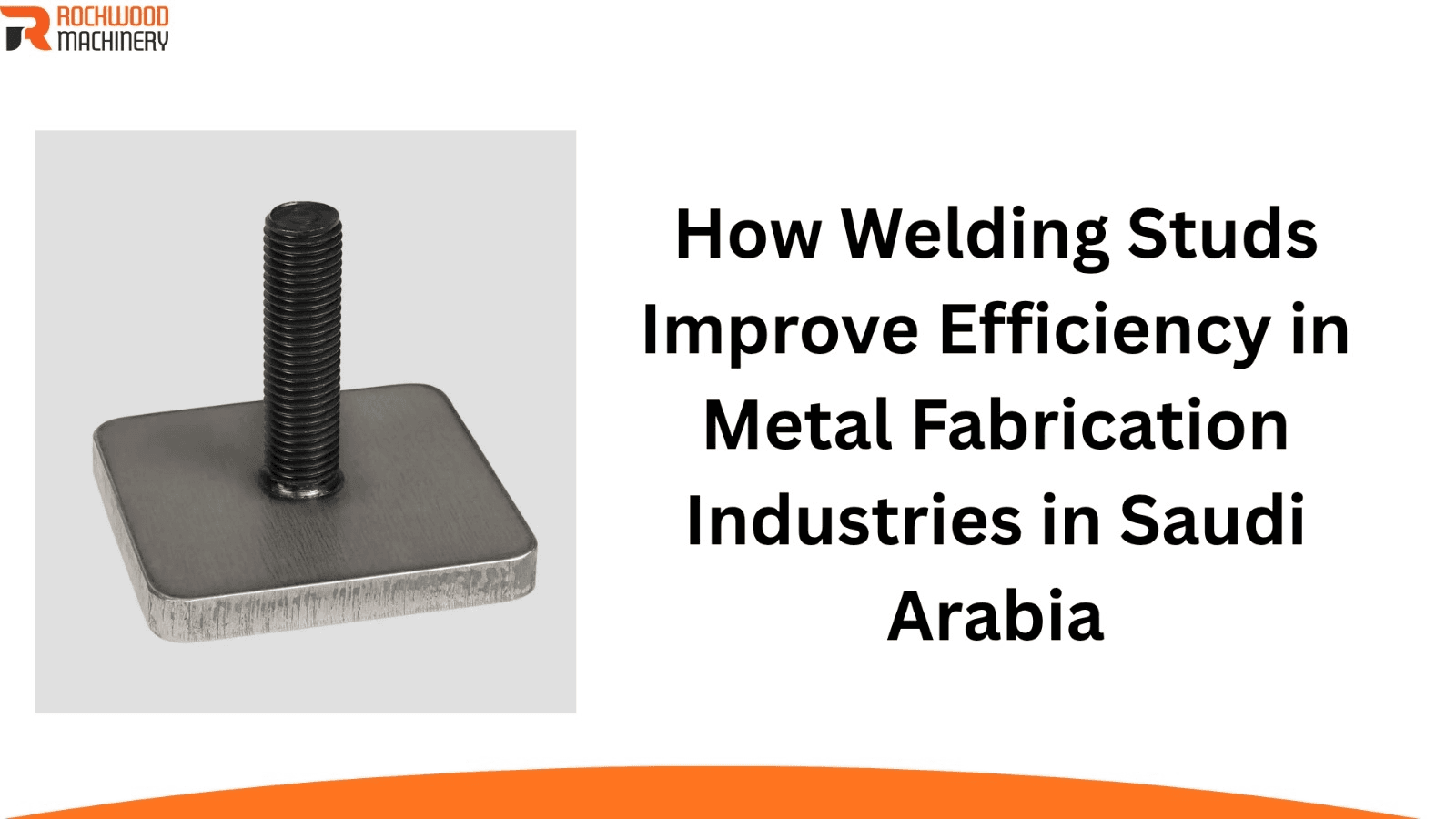
Welding studs Saudi Arabia are metal fasteners designed to be welded directly onto a metal surface. They are available in different sizes, materials, and configurations depending on industrial requirements. Common types include threaded studs, insulation pins, shear connectors, and internally threaded fasteners.
The stud welding process uses electric arc or capacitor discharge technology to permanently fuse the stud to the base metal surface within seconds. This creates a strong and reliable bond without damaging the opposite side of the material. Stud welding is widely used in structural steel fabrication, shipbuilding, automotive manufacturing, bridge construction, and heavy engineering applications.
Faster Production Speed
One of the biggest advantages of welding studs is the speed of installation. Traditional fastening methods require several steps, including drilling holes, aligning parts, inserting bolts, and tightening fasteners. These processes increase labor costs and consume production time.
Stud welding simplifies the fastening process because a stud can be welded directly onto the metal surface in seconds. In large industrial projects across Saudi Arabia, where strict deadlines are common, this speed advantage greatly improves workflow efficiency.
Modern fabrication workshops can install thousands of studs daily using automated stud welding equipment. This enables manufacturers to increase productivity while maintaining high standards of weld quality and structural integrity.
Strong and Durable Connections
Strength and reliability are essential in industries such as oil and gas, petrochemicals, power generation, and heavy construction. Welding studs provide high-strength connections capable of withstanding vibration, heavy loads, and harsh environmental conditions.
Unlike traditional mechanical fasteners, stud welding distributes stress evenly across the welded area. This reduces the risk of joint failure and improves the long-term durability of fabricated structures. The welding process also creates a clean and secure bond that performs well under high-pressure and high-temperature conditions.
Saudi Arabia’s industrial sector often operates under extreme weather conditions, including high temperatures, dust, and corrosion exposure. Stud welding technology offers excellent resistance to these harsh environments, making it suitable for industrial fabrication projects across the Kingdom.
Reduced Material Damage
Traditional drilling methods can weaken metal structures by creating holes and stress points in the material. Welding studs eliminates this issue because the studs are attached directly to the metal surface without penetrating the opposite side.
This helps preserve the material's structural integrity while maintaining a clean, finished appearance. The process also minimizes distortion and reduces the need for additional repair work after installation.
Modern stud welding systems provide precise heat control for thin sheet metal, preventing burn-through and surface damage. This makes stud welding ideal for precision fabrication projects where appearance and material quality are important.
Lower Labor and Operational Costs
Efficiency in metal fabrication is closely connected to cost reduction. Welding studs helps manufacturers lower operational expenses through faster installation, reduced labor requirements, lower material wastage, minimal rework, and improved production consistency.
Because stud welding is highly automated, companies can maintain high production output with fewer workers. This improves profitability while ensuring consistent fabrication quality across large industrial projects.
Many fabrication companies are investing in automated stud welding systems to improve operational performance and remain competitive in Saudi Arabia’s growing industrial market.
Supporting Saudi Arabia’s Industrial Vision
Saudi Arabia’s Vision 2030 initiative is driving major investments in infrastructure, transportation, energy, and industrial manufacturing. As the Kingdom expands its industrial capabilities, the demand for advanced fabrication technologies continues to increase.
Stud welding supports these industries by providing fast, reliable, and cost-effective fastening solutions for steel structures, pipelines, industrial equipment, and heavy engineering applications. Fabricators using advanced welding systems can improve productivity, meet international quality standards, and complete projects more efficiently.
The growing adoption of advanced welding technologies highlights the important role Welding studs Saudi Arabia will continue to play in the Kingdom’s industrial development and manufacturing growth.
Conclusion
Welding studs are becoming an essential solution for improving efficiency in Saudi Arabia’s metal fabrication industry. Their ability to increase production speed, create durable connections, reduce material damage, and lower operational costs makes them highly valuable for modern industrial applications.
As Saudi Arabia invests in industrial growth and infrastructure, the demand for advanced stud welding solutions will continue to rise. Companies that adopt modern welding technologies can improve productivity, maintain high-quality standards, and remain competitive in the Kingdom’s evolving fabrication sector.
To learn more, click: Standard vs. Advanced Welding Rotators: Which is Best for Your Workshop in Saudi Arabia?

