
Standard vs. Advanced Welding Rotators: Which is Best for Your Workshop in Saudi Arabia?
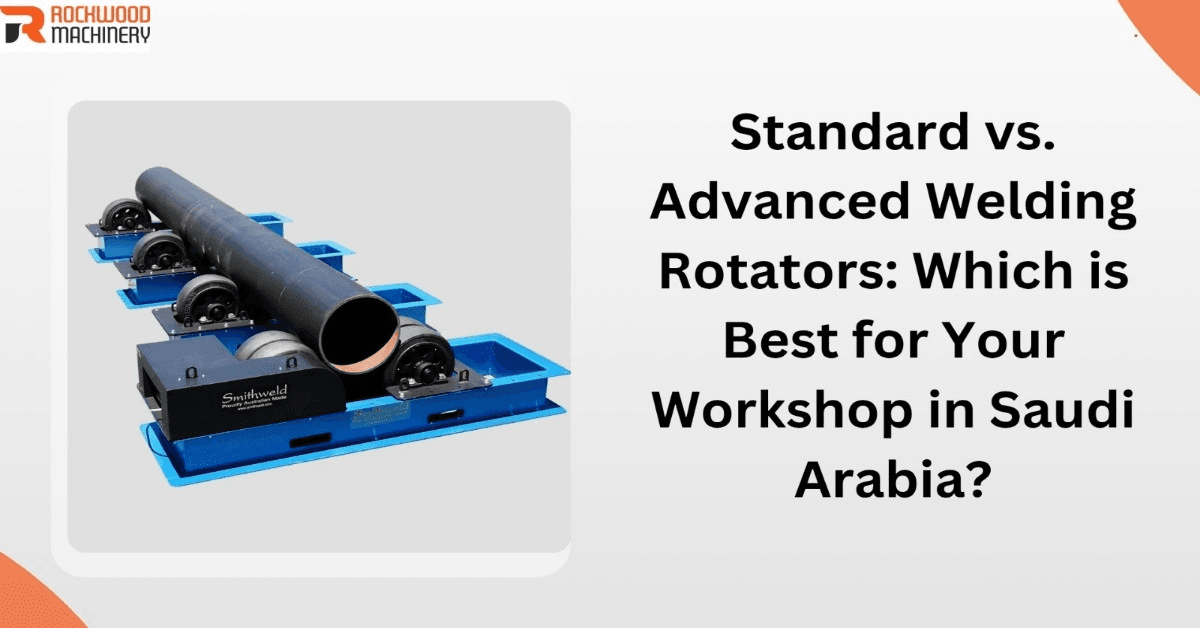
Saudi Arabia's industrial sector is experiencing significant growth in various areas, including oil and gas, petrochemicals, heavy fabrication, shipbuilding, and infrastructure development. As competition intensifies, fabrication workshops face increasing pressure to complete projects more quickly while ensuring high standards of welding quality and workplace safety.
This is where welding rotators play an important role. Welding rotators enable the rotation of cylindrical workpieces, such as pipes, tanks, and pressure vessels, during welding operations. This allows welders to achieve smoother, more accurate welds with reduced manual effort. Modern fabrication workshops rely on these systems to improve efficiency and productivity.
However, many workshop owners still face a common question: should they choose standard welding rotators or advanced welding rotators?
The answer depends on your production requirements, project size, automation goals, and budget.
What Are Standard Welding Rotators?
Welding Rotators Saudi Arabia solutions are basic rotating systems designed for routine welding applications. They usually include powered rollers and idle rollers that rotate the workpiece at controlled speeds.
These rotators are commonly used in:
-
Pipe fabrication
-
Small tank manufacturing
-
Repair and maintenance projects
-
Medium-scale steel fabrication
-
General workshop operations
Operators manually adjust the rollers according to the diameter of the workpiece. Standard rotators are popular because they are simple, reliable, and affordable.
Advantages of Standard Welding Rotators
Affordable Investment
One of the biggest benefits of standard rotators is cost efficiency. Small and medium workshops in Saudi Arabia often choose these systems because they improve productivity without requiring a large investment.
Easy to Use
Standard rotators are user-friendly and require minimal operator training. Fabrication workshops can quickly integrate them into daily operations.
Reliable Performance
For routine welding projects, standard rotators provide stable rotation and dependable welding support.
Lower Maintenance Costs
Because these systems contain fewer automated components, maintenance and repairs are generally simpler and more economical.
Limitations of Standard Welding Rotators
Despite their advantages, standard rotators also have limitations.
-
Manual adjustment takes additional time
-
Limited automation features
-
Lower efficiency for large-scale projects
-
Reduced compatibility with robotic welding systems
-
Less suitable for oversized vessels
As industrial production expands in Saudi Arabia, many companies are now seeking more advanced automation solutions.
What Are Advanced Welding Rotators?
Advanced welding rotators are highly automated systems designed for heavy industrial fabrication. These machines often include self-aligning rollers, digital control systems, programmable speed adjustments, and integration with robotic welding technologies.
They are commonly utilized in various industries, including:
-
Oil & gas
-
Pressure vessel manufacturing
-
Wind tower fabrication
-
Petrochemical plants
-
Offshore construction
-
Heavy engineering projects
Advanced welding rotators automatically adapt to different vessel diameters and provide precise rotational control during welding operations.
Benefits of Advanced Welding Rotators
Automatic Self-Alignment
Advanced systems automatically adjust to varying workpiece sizes, reducing setup time and improving operational efficiency.
Increased Productivity
Automation allows continuous welding operations with fewer interruptions, helping workshops complete projects faster.
Better Weld Quality
Consistent rotational movement helps achieve smoother welds with fewer defects. This is especially important in industries where welding quality directly affects safety and durability.
Improved Worker Safety
Advanced rotators reduce manual handling of heavy cylindrical structures, helping lower operator fatigue and workplace injuries.
Compatibility With Welding Automation
Modern fabrication workshops increasingly use robotic welding systems. Advanced rotators integrate efficiently with automated welding technologies and digital production lines.
Challenges of Advanced Welding Rotators
While advanced systems offer significant advantages, they also come with specific challenges.
-
Higher initial investment
-
More technical maintenance requirements
-
Skilled operators may be required
-
Small workshops may not fully utilize advanced features
Businesses should evaluate their long-term production goals before investing in advanced automation systems.
Which Welding Rotator Is Right for Your Workshop?
Choosing between standard and advanced welding rotators depends entirely on your workshop’s operational needs.
Standard Welding Rotators Are Ideal If:
-
Your workshop handles moderate production volumes
-
Budget control is important
-
You mainly perform repair or custom fabrication work
-
Automation is not currently a priority
Advanced Welding Rotators Are Ideal If:
-
Your company handles large industrial fabrication projects
-
High production speed is essential
-
Precision welding quality is critical
-
You plan to expand into automated welding systems
-
Long-term scalability is important
Growing Demand for Welding Automation in Saudi Arabia
Saudi Arabia’s Vision 2030 initiative continues driving industrial modernization across multiple sectors. Fabrication companies are increasingly adopting automated welding equipment to improve efficiency, reduce downtime, and maintain international quality standards.
Industrial suppliers like Rockwood Saudi provide advanced automation solutions, including welding rotators, welding manipulators, welding positioners, and automated welding systems tailored for Saudi Arabia's growing industrial market.
Conclusion
Both standard and advanced welding rotators offer valuable benefits for fabrication workshops. Standard systems are cost-effective and reliable for routine projects, while advanced rotators deliver higher automation, improved welding precision, and better productivity for large-scale industrial operations.
Investing in the right welding equipment today can help workshops improve productivity, maintain consistent weld quality, and stay competitive in Saudi Arabia’s rapidly expanding industrial sector.
To continue reading, click: Top 7 Mistakes to Avoid When Buying Dot Peen Marking Machines in Saudi Arabia

