
Top 7 Mistakes to Avoid When Buying Dot Peen Marking Machines in Saudi Arabia
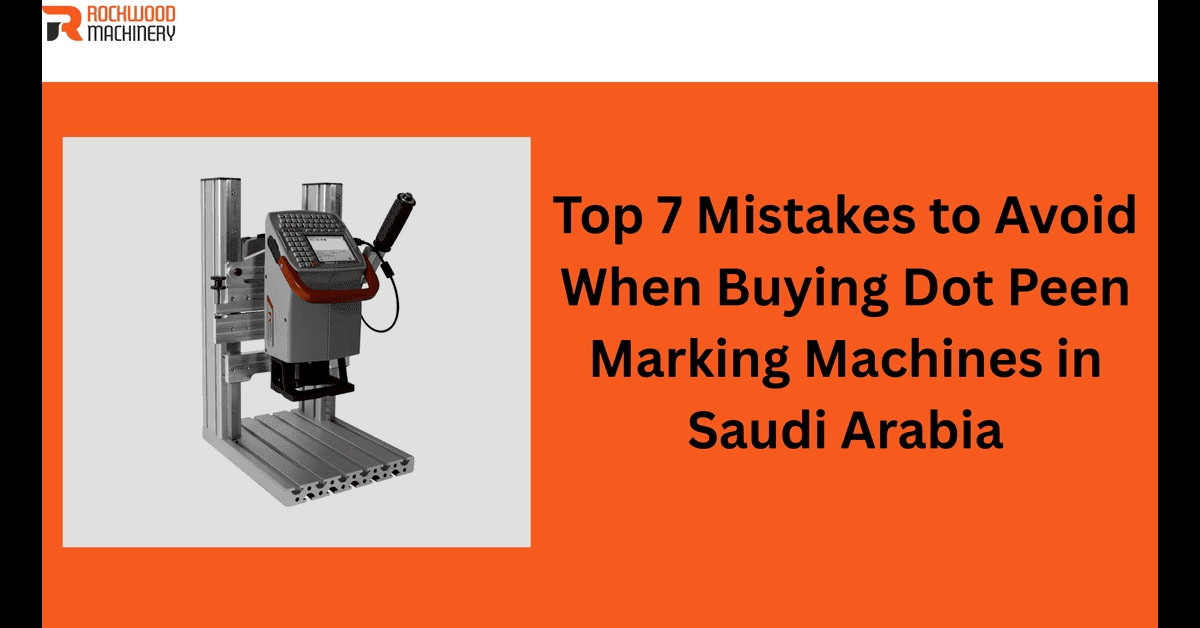
Saudi Arabia’s industrial sector is expanding rapidly across industries such as oil and gas, automotive, aerospace, steel fabrication, and heavy engineering. In these industries, permanent marking and traceability play a major role in maintaining quality control, product identification, and operational efficiency. Dot peen marking technology has become one of the most trusted solutions for engraving serial numbers, logos, QR codes, and barcodes on metal surfaces.
However, many businesses make costly mistakes when selecting marketing equipment. Choosing the wrong machine can reduce productivity, increase maintenance expenses, and create long-term operational problems. Understanding these common mistakes can help companies invest in the right equipment for their industrial needs.
Here are the top seven mistakes businesses should avoid when buying dot peen marking machines in Saudi Arabia.
1. Choosing Low Price Instead of Quality
One of the biggest mistakes buyers make is selecting the cheapest machine available without evaluating durability and long-term performance. While low-cost machines may appear attractive initially, they often compromise on precision, reliability, and machine lifespan. Many industries today prefer investing in high-quality Dot Peen Marking Machines Saudi Arabia manufacturers trust for consistent industrial performance and long-term operational reliability.
Industrial environments in Saudi Arabia can be extremely demanding due to heat, dust, and continuous production cycles. High-quality machinery is constructed with durable carbide pins, dependable electronics, and robust metal structures specifically designed for heavy-duty industrial operations. Choosing a reliable system can significantly reduce maintenance costs and downtime over time.
2. Ignoring Material Compatibility
Not all dot peen marking machines are suitable for every type of material. Some systems are designed for soft metals, while others are built to mark hardened steel, stainless steel, brass, aluminum, or coated components.
Before purchasing a machine, businesses should clearly identify the materials they will mark regularly. For example:
-
Hardened steel requires a stronger impact force
-
Aluminum needs controlled pressure
-
Stainless steel may require deeper engraving for better visibility
Ignoring material compatibility can result in poor-quality marks that become unreadable over time. Testing the machine on actual production materials before purchasing is always recommended.
3. Buying the Wrong Machine Type
Many buyers fail to determine whether they need a portable handheld machine or a stationary benchtop system. This decision directly affects workflow efficiency and production convenience.
Portable dot peen machines are ideal for:
-
Large pipelines
-
Heavy industrial structures
-
Vehicle chassis
-
Steel fabrication projects
Benchtop systems are more suitable for:
-
Small components
-
Nameplates
-
Batch production
-
Precision industrial applications
Choosing the wrong machine type can reduce productivity and make operations more difficult for workers.
4. Not Planning for Future Expansion
Another common mistake is purchasing equipment solely for current production needs without considering the potential for future business expansion. As industrial operations expand, production demands often increase significantly.
Modern industries now require advanced features such as:
-
Automatic serial number generation
-
QR code engraving
-
Barcode marking
-
PLC integration
-
Production line automation
Many companies invest in scalable dot peen marking machines used in automated manufacturing environments within Saudi Arabian industries. Future-ready systems help businesses avoid expensive upgrades later while improving long-term operational efficiency.
5. Ignoring Marking Depth Requirements
Marking depth is one of the most important factors in permanent industrial identification, yet many buyers overlook it during the purchasing process.
Different industries require different marking depths depending on environmental exposure and operating conditions. Components that are exposed to corrosion, painting, sandblasting, or outdoor weather conditions require deeper permanent marks to ensure readability over time.
For example:
-
Oil and gas equipment faces harsh environmental conditions
-
Automotive components may undergo coating processes
-
Outdoor steel structures require durable identification
Dot peen technology is preferred because it creates permanent physical indentations that remain visible even after surface treatments. Industry experts recommend choosing machines that offer adjustable marking depth to accommodate various industrial applications.
6. Overlooking After-Sales Support
Many buyers focus solely on machine specifications, neglecting supplier support services. This can become a major issue if the equipment requires maintenance, calibration, spare parts, or software updates.
A reliable supplier should provide:
-
Technical assistance
-
Installation support
-
Operator training
-
Spare parts availability
-
Warranty services
In industrial operations, machine downtime can lead to significant production delays and financial losses. Selecting a supplier with reliable after-sales service is crucial for maintaining smooth operations.
7. Buying Without Testing the Machine
One of the biggest mistakes businesses make is purchasing a machine without requesting a live demonstration or sample marking test.
A live test allows buyers to evaluate:
-
Marking quality
-
Machine speed
-
Software usability
-
QR code readability
-
Noise levels
-
Accuracy on actual materials
Testing the machine before purchase helps businesses confirm whether the equipment meets their production and quality requirements.
Final Thoughts
Investing in the right dot peen marking equipment is essential for industries that require permanent product identification and traceability. Avoiding these common mistakes can help businesses choose durable, efficient, and future-ready machines.
When selecting Dot Peen Marking Machines Saudi Arabia industries depend on, companies should carefully evaluate quality, material compatibility, marking depth, scalability, and supplier support. A well-chosen machine can improve productivity, reduce maintenance costs, and deliver reliable industrial performance for many years.
To learn more, click: 7 Key Features to Look for When Buying Laser Rust Removal Machines in Saudi Arabia

