
How Welding Rotators in Saudi Arabia Improve Productivity in Heavy Industries
In today’s fast-paced industrial environment, efficiency and precision are more important than ever—especially in a rapidly developing nation like Saudi Arabia. Companies are continuously seeking smarter ways to enhance productivity through massive infrastructure projects, oil and gas expansions, and industrial diversification under Vision 2030. One such solution gaining popularity is the use of welding rotators in Saudi Arabia.
These machines have become a vital part of modern fabrication, helping industries handle large-scale welding tasks with ease, speed, and accuracy.
What Are Welding Rotators?
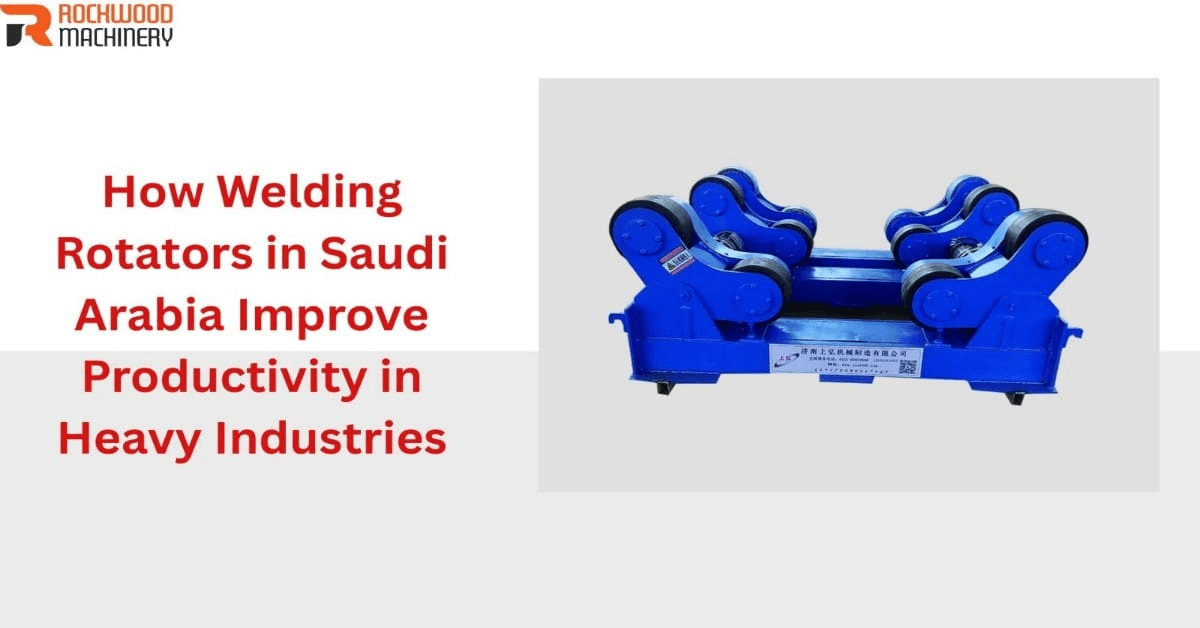
Welding rotators are mechanical devices designed to rotate cylindrical workpieces such as pipes, tanks, and pressure vessels during welding. They use motorized rollers to rotate the object at a controlled speed, allowing welders to maintain a consistent welding position.
Instead of manually repositioning heavy components, which is both time-consuming and risky, welding rotators automate the process, making operations smoother and more efficient.
Boosting Productivity in Industrial Operations
Welding rotators greatly enhance productivity in various applications. Traditional welding methods often require frequent stopping and repositioning of materials, which slows down the workflow.
With the use of welding rotators in Saudi Arabia, industries can achieve continuous welding without interruptions. This efficient process minimizes downtime and enables quicker project completion, which is essential in large-scale industrial settings.
Improving Weld Quality and Consistency
In heavy industries, such as oil and gas, even minor welding defects can have serious consequences. Welding rotators ensure a stable and consistent welding position, resulting in uniform weld beads.
By eliminating awkward angles and sudden movements, these machines reduce human error. Welders can focus entirely on the quality of the weld, resulting in stronger, cleaner, and more reliable joints.
Reducing Worker Fatigue
Handling heavy cylindrical structures manually can be physically demanding. Workers often need to lift, adjust, and reposition components multiple times during the welding process.
Welding rotators alleviate this task by automatically rotating the workpiece. This allows welders to work in comfortable positions, reducing fatigue and improving overall efficiency. A less fatigued workforce is more productive and less prone to mistakes.
Supporting Large-Scale Projects
Saudi Arabia is home to some of the world’s largest industrial and infrastructure projects. From pipeline installations to refinery construction, these projects require precise and efficient welding of large components.
Large-scale projects primarily drive the increasing need for welding rotators in Saudi Arabia. These machines are capable of handling heavy loads and large diameters, making them perfect for manufacturing storage tanks, pressure vessels, and pipelines.
Enhancing Automation and Precision
Automation is a crucial trend that is shaping the future of manufacturing in Saudi Arabia. Welding rotators can be integrated with automated welding systems and other industrial welding machines in Saudi Arabia, creating a highly efficient and synchronized production environment.
When combined with automatic welding systems, rotators ensure consistent speed and positioning. This not only improves accuracy but also reduces material wastage and rework, making operations more cost-effective.
Long-Term Cost Efficiency
Although welding rotators require an initial investment, they offer significant long-term savings. By enhancing efficiency and minimizing errors, companies can reduce their operational costs.
Quicker production times allow for the completion of more projects within their deadlines, which in turn boosts profitability. Additionally, reduced rework and material waste contribute to overall cost savings.
Improving Workplace Safety
Safety is a significant concern in heavy industries. Manual handling of large and heavy components can lead to accidents and injuries.
Welding rotators help reduce these risks by automating the process of rotation. Workers are less exposed to hazardous tasks, creating a safer working environment. This also helps companies meet strict safety standards and regulations.
Versatility Across Industries
Welding rotators are extremely versatile and can be utilized across various industries.
-
Oil & gas pipeline fabrication
-
Shipbuilding and marine engineering
-
Pressure vessel manufacturing
-
Structural steel fabrication
-
Power plant construction
This adaptability makes them an essential tool for many industrial sectors across Saudi Arabia.
The Future of Industrial Welding
As Saudi Arabia modernizes its industrial sector, the use of advanced equipment such as welding rotators is expected to increase. Companies investing in such technologies will achieve a competitive advantage by delivering high-quality results more quickly and efficiently.
The increasing reliance on welding rotators in Saudi Arabia reflects a broader shift toward automation, precision, and productivity in the industrial landscape.
Conclusion
Welding rotators are transforming the way heavy industries operate. By improving efficiency, enhancing weld quality, reducing labor fatigue, and increasing safety, they play a crucial role in modern fabrication processes.
In a country focused on industrial growth and innovation, adopting advanced solutions like welding rotators is not just beneficial—it’s essential. As demand continues to rise, these machines will remain a key driver of productivity in Saudi Arabia’s industrial future.
To learn more, click: Safety Guidelines for Operating Ultrasonic Cleaning Machines in Industries

