
Reduce Rework and Delays: Why Industries in Saudi Should Invest in Welding Automation Machines
Production delays and rework can have a significant impact on industrial operations. A single welding defect may lead to additional inspections, repair work, material replacement, and schedule disruptions. For manufacturers, fabricators, and contractors across Saudi Arabia, maintaining consistent weld quality has become increasingly important as projects grow in size and complexity.
To address these challenges, many businesses are investing in Welding Automation Machines in Saudi Arabia. Automated welding systems significantly improve process control, reduce welding defects, and support faster production cycles. As industrial demands continue to rise, welding automation is becoming a crucial solution for enhancing production efficiency and quality control.
Understanding the Growing Adoption of Welding Automation Machines Across Industries
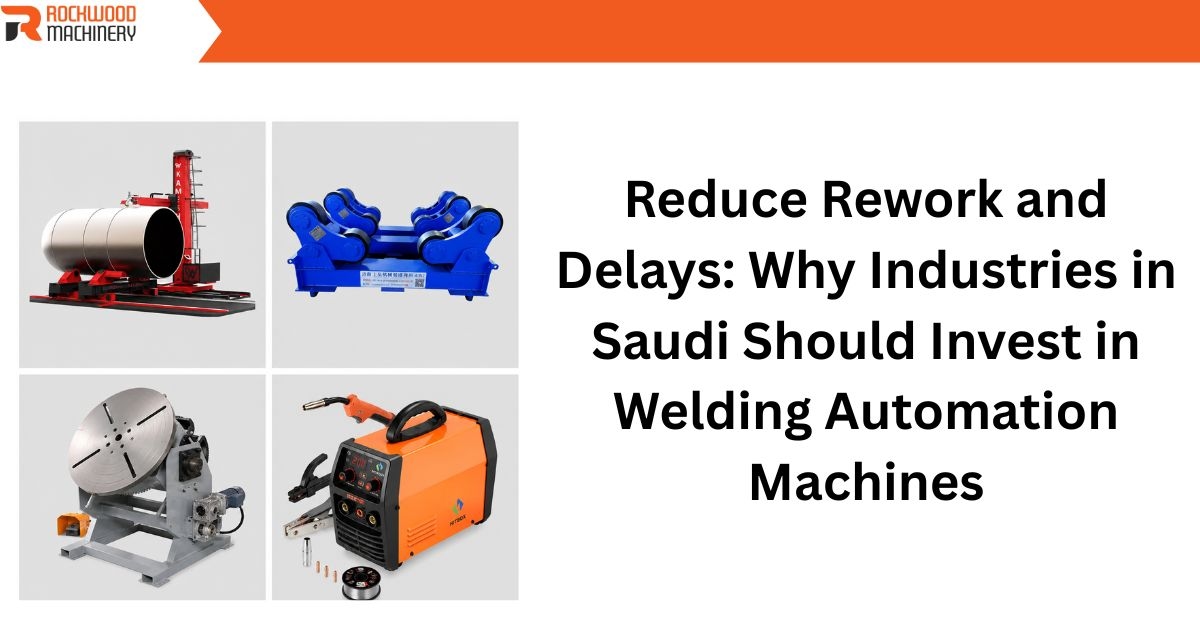
Welding automation machines are designed to perform welding operations with greater precision and consistency. These systems include equipment such as welding positioners, rotators, manipulators, and column and boom solutions that assist with repetitive welding tasks.
By maintaining controlled welding parameters throughout production, automation reduces variations that often occur during manual welding. This helps manufacturers achieve uniform weld quality across multiple components and production runs.
Industries such as steel fabrication, construction, oil and gas, and heavy engineering use welding automation to support demanding workloads while maintaining quality standards.
Why Rework and Production Delays Remain a Challenge for Saudi Industries
Several factors continue to affect productivity in industrial welding operations:
-
Inspection failures and rejected welds
-
Additional repair and correction work
-
Increased material consumption
-
Unplanned production interruptions
-
Higher labor and operating costs
When welding defects occur, production schedules often need to be adjusted to accommodate repairs and additional inspections. These disruptions can affect multiple stages of a project, including fabrication, assembly, transportation, and installation.
For businesses handling large-scale industrial projects, even minor delays can create scheduling challenges and increase overall project costs. Reducing rework remains one of the most effective ways to improve production efficiency and maintain delivery commitments.
Reducing Human Error and Material Waste Through Automation
One of the major advantages of automation is its ability to reduce process variations. Automated systems follow programmed instructions throughout the welding operation, helping maintain consistent results from start to finish.
Consistent Welding Parameters
Stable travel speed, accurate torch positioning, and controlled heat input help reduce common welding defects. This consistency improves weld quality and reduces the need for corrective work.
Lower Material Waste
Rejected welds often lead to wasted filler materials, grinding consumables, shielding gas, and replacement components. By reducing defects, automation helps businesses use materials more efficiently and control production costs.
Better Use of Skilled Labor
Instead of spending valuable time on repetitive welding tasks and repair work, skilled operators can focus on monitoring production, quality control, and specialized applications that require technical expertise.
These improvements contribute to smoother workflows and more reliable production schedules.
Why More Industries Are Investing in Welding Automation Machines
The demand for higher productivity and better quality control has encouraged more companies in Saudi Arabia to invest in welding automation machines.
Key reasons behind this growing adoption include:
-
Growing production requirements
-
Greater focus on weld consistency
-
Pressure to reduce operating costs
-
Faster project delivery expectations
-
Increased competition across industrial sectors
Manufacturers are looking for ways to increase output without compromising quality. Automation supports this goal by helping businesses maintain consistent welding performance while handling larger workloads.
As industrial development continues across Saudi Arabia, automated welding solutions are becoming an important part of modern fabrication and manufacturing facilities.
Choosing the Right Welding Automation Solution for Your Business
Selecting the right welding automation solution starts with understanding production requirements. Factors such as production volume, component size, welding processes, and quality expectations all influence equipment selection. A facility producing large cylindrical structures may require welding rotators, while heavy fabrication applications may benefit from column and boom systems or welding manipulators.
It is also important to consider future production goals. Equipment that can adapt to changing workloads and project requirements often delivers greater value over the long term. Working with an experienced supplier helps businesses identify solutions that align with operational needs and support efficient production workflows.
Conclusion
Rework and production delays can increase costs, consume valuable resources, and affect project schedules. For industries that depend on reliable welding quality, minimizing these challenges is essential for maintaining productivity and profitability.
By investing in Welding Automation Machines in Saudi Arabia, businesses can reduce human error, minimize material waste, improve weld consistency, and keep production running more efficiently. As industrial activity continues to expand across the Kingdom, welding automation is becoming a valuable investment for companies seeking dependable performance and stronger production results.
To learn more, click: What Are Welding Rotators and Why Are They Essential for Saudi Arabia's Fabrication Industry?

