
What Are Welding Rotators and Why Are They Essential for Saudi Arabia's Fabrication Industry?
Saudi Arabia's fabrication industry continues to grow as investments increase across oil and gas, petrochemicals, power generation, water treatment, and infrastructure projects. Fabrication workshops are expected to produce high-quality components while adhering to strict project deadlines. To achieve this, manufacturers rely on specialized equipment that improves efficiency and supports consistent welding results.
Among the most important pieces of equipment used in heavy fabrication is the welding rotator. Designed to handle large cylindrical workpieces, it helps fabricators improve productivity, maintain weld quality, and streamline manufacturing operations. As industrial projects advance, the demand for Welding Rotators in Saudi Arabia continues to rise.
What Is a Welding Rotator and Why Is It Used in Fabrication?
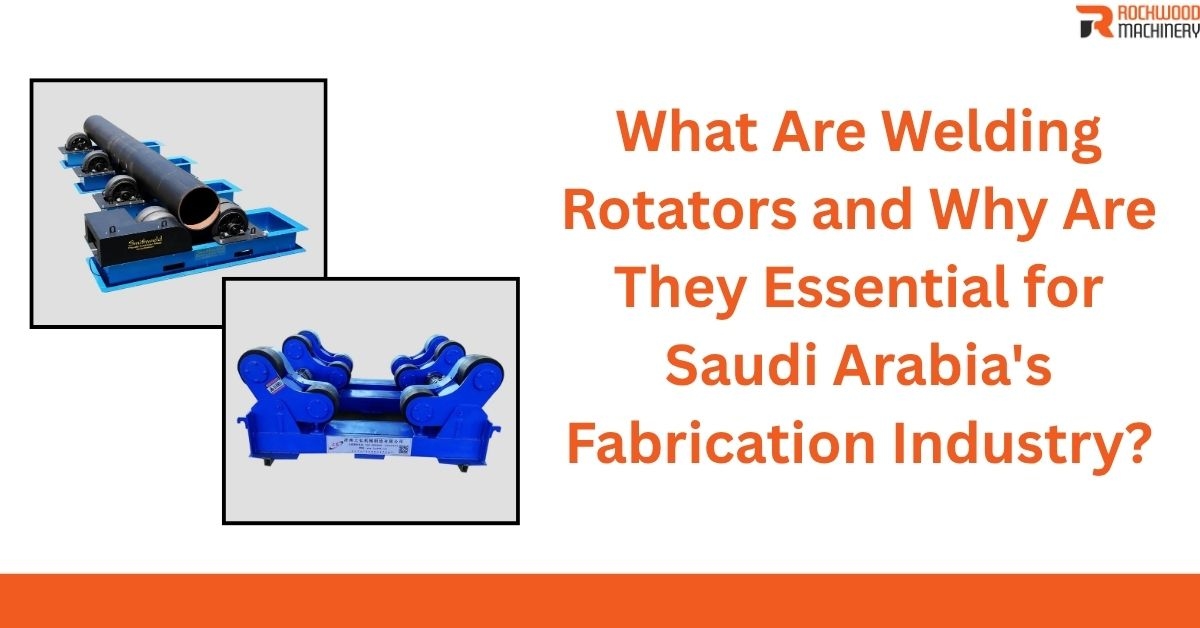
A welding rotator is a machine used to rotate cylindrical workpieces during welding operations. It consists of wheel assemblies that support the workpiece and turn it at a controlled speed, allowing welders or automated welding systems to complete welds without repeatedly repositioning the component.
Welding rotators are commonly used for:
-
Pressure vessels
-
Storage tanks
-
Large pipes
-
Heat exchangers
-
Industrial drums
Different models are available to suit various fabrication requirements, including conventional, self-aligning, and adjustable rotators. Their primary function is to ensure smooth and controlled rotation throughout the welding process.
Why Are Welding Rotators Important in Heavy Fabrication?
Heavy fabrication involves large components that can be difficult to reposition during welding. A welding rotator keeps the workpiece moving smoothly, reducing interruptions and minimizing handling requirements.
This enables fabrication facilities to enhance workflow efficiency, minimize production delays, and better adhere to project schedules.
Which Industries in Saudi Arabia Use Welding Rotators the Most?
Several industries rely on welding rotators to support fabrication projects involving large cylindrical structures.
Oil and Gas
The oil and gas sector requires extensive fabrication of pipelines, pressure vessels, separators, and storage tanks. These components often require lengthy welding processes that benefit from controlled rotation.
Petrochemical Manufacturing
Petrochemical facilities use large process equipment that requires precision fabrication and consistent weld quality.
Water Treatment and Desalination
Saudi Arabia's water infrastructure depends heavily on tanks, pipes, and pressure-containing equipment used in treatment and desalination plants.
Power Generation
Power generation projects require fabricated components where weld integrity and reliability are critical.
According to Saudi Vision 2030, expanding domestic manufacturing capabilities remains a major priority, supporting continued demand for advanced fabrication equipment.
How Do Welding Rotators Improve Welding Quality?
Consistent weld quality is one of the most important requirements in industrial fabrication. Poor positioning during welding can lead to defects, uneven weld beads, and costly rework.
Welding rotators help maintain a stable welding position by rotating the workpiece smoothly at a controlled speed. This allows welders to focus on producing accurate welds rather than constantly adjusting the component.
Benefits include:
-
Improved weld consistency
-
Better weld appearance
-
Reduced risk of defects
-
More reliable production quality
-
Greater compliance with fabrication standards
The advantages are especially important in industries where welded components face strict inspection and quality standards.
Can Welding Rotators Increase Fabrication Productivity?
Yes. Welding rotators reduce downtime by eliminating frequent workpiece repositioning during welding. Continuous rotation supports a smoother workflow, allowing fabrication teams to complete jobs faster while maintaining quality standards.
In workshops that handle large vessels, tanks, and pipes, these efficiency gains can significantly impact overall production performance.
How Do Welding Rotators Support Automated Welding Systems?
Welding rotators provide controlled workpiece rotation that works seamlessly with automated welding systems. This enhances the consistency and repeatability of welds, leading to improved overall production efficiency.
As automation becomes more common in industrial fabrication, rotators continue to play an important role in supporting reliable and accurate welding operations.
What Should Fabricators Consider When Choosing a Welding Rotator?
Selecting the right welding rotator depends on the specific requirements of the fabrication operation.
Important considerations include:
-
Maximum load capacity
-
Workpiece diameter range
-
Required rotation speed
-
Workshop layout
-
Future production needs
Choosing equipment that aligns with operational demands can improve efficiency, reduce maintenance concerns, and support long-term productivity goals.
Conclusion
Welding rotators have become an essential part of modern fabrication operations. Their ability to rotate large cylindrical workpieces efficiently helps improve weld quality, increase productivity, and support smoother manufacturing processes.
As industrial development progresses throughout the Kingdom, the role of welding rotators in Saudi Arabia is expected to become increasingly important. Fabrication companies that invest in reliable welding equipment are better positioned to meet project requirements, maintain quality standards, and improve overall operational efficiency.
To learn more, click: Modern Innovations in Road Pile Driving Equipment in Saudi Arabia: What’s New?

