
Industrial Growth in Saudi Arabia: Advantages and Applications of Welding Automation Machines
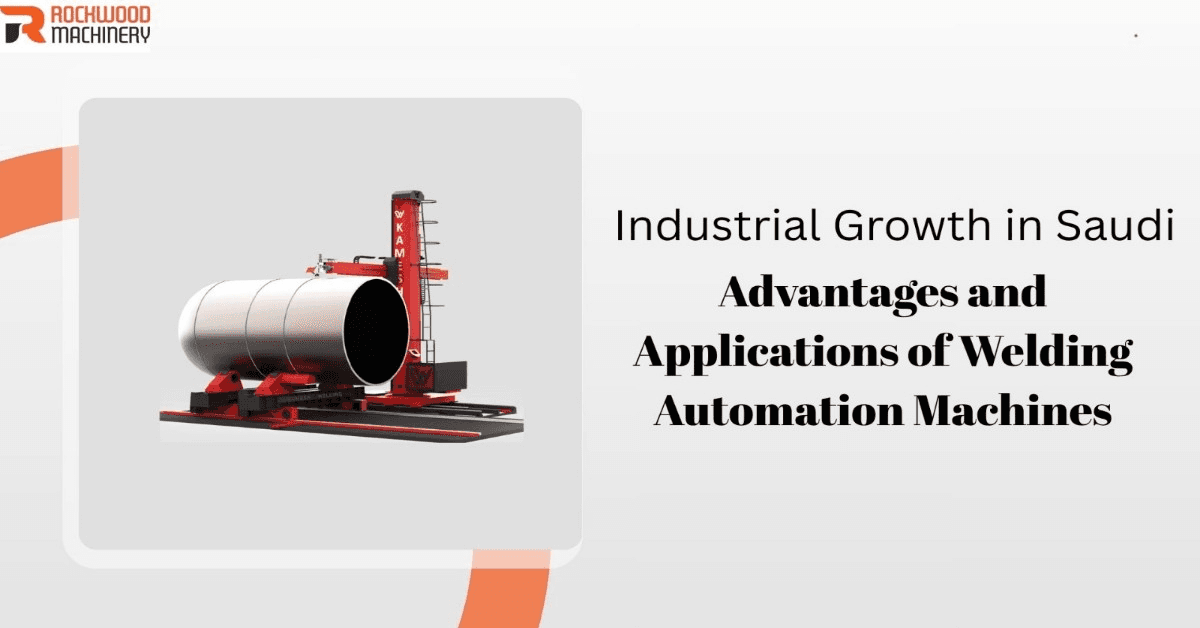
The industrial landscape of Saudi Arabia is undergoing rapid changes. With the government’s strong push toward economic diversification under Saudi Vision 2030, the country is investing heavily in manufacturing, infrastructure, and advanced technologies. Among these developments, welding automation has emerged as a key driver of efficiency and quality in modern industries.
Welding has traditionally been a labor-intensive process that requires skilled workers and a considerable amount of time. While manual welding still has its place, industries today are increasingly turning to automation to meet growing demands and maintain global standards. This shift has led to the rising importance of welding Automation machines in Saudi Arabia, especially in sectors that rely on precision and large-scale production.
The Shift Toward Automation
As industries grow, the demand for faster and more reliable production processes becomes essential. Automation offers a practical solution by reducing human error and increasing output. Welding automation machines are designed to handle repetitive tasks with high accuracy, ensuring that every weld meets consistent quality standards.
In Saudi Arabia, industries such as oil and gas, construction, and heavy engineering are rapidly adopting these systems. The demand for welding Automation machines in Saudi Arabia is growing as companies aim to improve efficiency while maintaining safety and cost control.
These machines include welding rotators, positioners, column and boom systems, and robotic welding arms. Each of these plays a specific role in enhancing productivity and ensuring precision in fabrication processes. Alongside automation, the use of Industrial welding machines in Saudi Arabia continues to support various fabrication needs where manual or semi-automatic processes are still required.
Advantages of Welding Automation Machines
One of the most noticeable benefits of welding automation is increased productivity. Automated systems can function continuously without fatigue, enabling companies to complete projects more quickly and manage larger workloads. This capability is particularly beneficial in Saudi Arabia, where large-scale industrial projects are prevalent.
Consistency in quality is another major advantage. Unlike manual welding, which can vary depending on the operator’s skill, automated machines deliver uniform results. This reduces defects, minimizes rework, and ensures that final products meet strict industry standards.
Cost efficiency also plays a crucial role. Although the initial investment in automation may seem high, it leads to long-term savings. Reduced labor costs, lower material wastage, and improved operational efficiency all contribute to better profitability.
Automation greatly enhances safety. Welding exposes workers to high temperatures, sparks, and hazardous fumes. By minimizing direct human involvement, companies can create a safer work environment for their employees.
Additionally, automation allows for scalability. Businesses can increase production capacity without compromising quality, making it easier to meet growing market demands.
Applications Across Key Industries
The applications of welding automation machines are wide-ranging across Saudi Arabia.
In the oil and gas sector, automation is essential for pipeline welding, storage tanks, and pressure vessels. These structures require strong and reliable welds to ensure safety and long-term performance. Automated systems provide the precision needed for such critical applications.
The construction industry also benefits greatly from welding automation. With numerous mega projects underway as part of Saudi Vision 2030, there is a constant demand for high-quality structural steel fabrication. Automation helps deliver accurate results within tight deadlines.
Shipbuilding is another area where automation plays a key role. Welding large metal components manually can be time-consuming and inconsistent. Automated systems improve both speed and accuracy, ensuring durable and reliable structures.
Heavy equipment manufacturing relies on welding automation to produce strong and long-lasting machinery components. This not only improves product quality but also reduces production time.
Even the automotive sector in Saudi Arabia is gradually embracing robotic welding technologies to enhance efficiency and meet international standards.
Future Outlook
The future of welding automation in Saudi Arabia looks highly promising. As industries modernize, the adoption of advanced technologies will increase. Technologies like artificial intelligence, real-time monitoring, and IoT-enabled welding systems are expected to significantly improve efficiency and accuracy.
The continued growth of welding Automation machines in Saudi Arabia reflects the country’s commitment to building a strong and sustainable industrial sector. With ongoing investments and government support, automation will remain a key component of industrial development.
Conclusion
The rapid industrial growth of Saudi Arabia is closely tied to the adoption of advanced technologies such as welding automation. These machines offer clear advantages in terms of productivity, quality, safety, and cost efficiency.
As the nation progresses under Saudi Vision 2030, industries are embracing smarter solutions to stay competitive. Welding automation is not just a trend—it is a necessity for modern manufacturing. Companies investing in these systems today are positioning themselves for long-term success in an increasingly demanding global market.
To learn more, click: How Welding Rotators in Saudi Arabia Improve Productivity in Heavy Industries

