
Is Welding Accuracy Affecting Product Quality? The Role of Robotic Welding Machines in Saudi Arabia
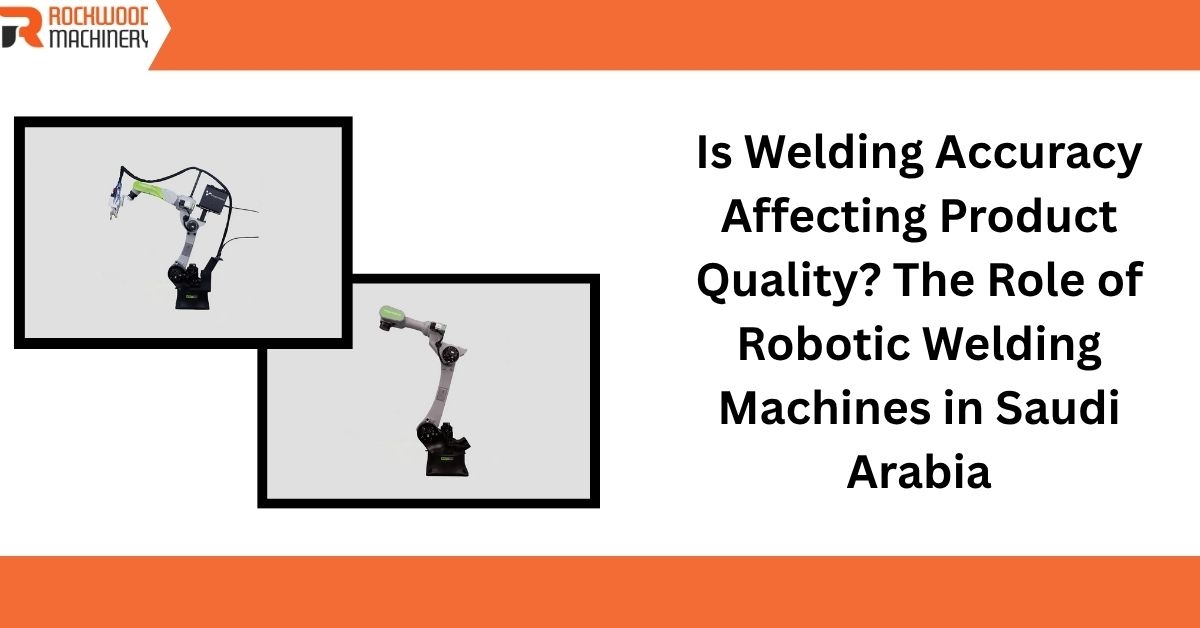
A weld may look acceptable on the surface, yet small inconsistencies can create major problems once a product enters service. In industries such as oil and gas, construction, metal fabrication, automotive manufacturing, and industrial equipment production, welding accuracy directly influences strength, durability, and overall product quality. As manufacturers across the Kingdom aim for higher production standards, Robotic Welding Machines in Saudi Arabia are becoming an important part of modern fabrication facilities.
Why Welding Accuracy Matters More Than Ever
Every welded component carries a responsibility. A slight deviation in weld penetration, alignment, or heat input can affect structural integrity. When products are subjected to pressure, vibration, or heavy loads, these imperfections often become visible through cracks, distortion, or premature failure.
Common quality issues caused by inaccurate welding include:
-
Uneven weld beads
-
Excessive spatter
-
Weak joint strength
-
Inconsistent penetration
-
Material distortion due to excessive heat
-
Increased rework and production delays
For manufacturers supplying critical sectors in Saudi Arabia, maintaining consistent weld quality is no longer an advantage. It has become a requirement.
The Challenge of Manual Welding Consistency
Skilled welders remain a valuable part of the fabrication industry. However, maintaining the same level of precision across hundreds or thousands of welds can be difficult.
Factors that affect manual welding accuracy include:
-
Operator fatigue during long shifts
-
Variations in technique between welders
-
Difficult welding positions
-
Complex production schedules
-
Human error during repetitive tasks
Large-scale production facilities often struggle to achieve uniform results when relying entirely on manual processes. This challenge has encouraged many manufacturers to explore automation solutions.
How Robotic Welding Machines Improve Product Quality
Unlike manual operations, robotic welding systems follow programmed paths with exceptional precision. Each weld is executed according to predefined parameters, helping manufacturers maintain consistent quality across production batches.
Consistent Weld Quality
A robotic welding system repeats the same motion with minimal variation. This consistency helps create uniform welds throughout the production cycle.
For manufacturers producing structural steel components, pipelines, machinery frames, and industrial equipment, consistent weld quality reduces the likelihood of defects and customer complaints.
Improved Penetration Control
Weld penetration plays a major role in joint strength. Insufficient penetration may weaken the connection, while excessive penetration can damage the material.
Robotic systems maintain controlled welding parameters, helping achieve the desired penetration level throughout production.
Reduced Rework Costs
Rework consumes valuable production time and increases operating costs. A single defective weld may require grinding, repair welding, inspection, and retesting.
Accurate robotic welding minimizes these issues and helps production teams focus on output rather than corrections.
Better Repeatability for Large Production Runs
Manufacturers producing identical parts require repeatable results. Robotic systems ensure that every component receives the same welding treatment, regardless of production volume.
This advantage is particularly important for fabrication companies supplying infrastructure projects across Saudi Arabia.
Supporting Saudi Arabia's Industrial Growth
Saudi Arabia continues to expand its manufacturing sector through major industrial investments and localization initiatives under Vision 2030. As production standards rise, factories are investing in advanced automation technologies that support quality improvement and operational efficiency.
The adoption of Robotic Welding Machines in Saudi Arabia aligns with this shift toward smarter manufacturing environments. These systems help companies meet demanding project specifications while maintaining competitive production schedules.
The Connection Between Robotic and Laser Welding Technology
Many modern fabrication facilities combine robotic automation with advanced welding processes. Among these technologies, Laser welding machines in Saudi Arabia are gaining attention for applications that require exceptional precision and minimal heat distortion.
Laser welding offers several advantages:
-
Narrow and clean weld seams
-
Reduced thermal impact on materials
-
Faster processing speeds
-
Improved appearance of finished products
When integrated with robotic systems, laser welding can deliver highly accurate results for industries requiring precision fabrication.
Maintaining Weld Quality After Production
Quality does not end when the welding process is complete. Surface contamination, oxidation, and discoloration can affect the appearance and performance of welded components.
This is where Weld cleaning machines in Saudi Arabia play an important role. These machines remove oxidation marks, heat tint, and surface impurities that often appear after welding.
Benefits of weld cleaning equipment include:
-
Improved surface finish
-
Enhanced corrosion resistance
-
Faster cleaning compared to manual methods
-
Better preparation for inspection and finishing processes
Combining robotic welding with effective weld cleaning creates a more complete quality-control process.
Choosing the Right Welding Automation Solution
Not every production facility requires the same welding setup. The right solution depends on production volume, material type, product complexity, and quality requirements.
Manufacturers evaluating automation often consider:
-
Production capacity targets
-
Material thickness ranges
-
Joint configurations
-
Future expansion plans
-
Required welding processes
Many facilities also integrate Industrial welding machines in Saudi Arabia alongside robotic systems to handle specialized fabrication tasks that require flexibility.
Final Thoughts
Product quality starts with precision at every stage of fabrication, and welding accuracy remains one of the most important factors in determining the strength, reliability, appearance, and service life of a finished product. Even minor welding defects can lead to costly repairs, production delays, and quality concerns. Consistent and repeatable welding processes help manufacturers maintain higher standards while reducing waste and rework.
As industries across the Kingdom continue to modernize, Robotic Welding Machines in Saudi Arabia are becoming a valuable investment for companies seeking better productivity and dependable weld quality. With advanced solutions from Rockwood Saudi, manufacturers can access reliable welding automation technologies, including Laser welding machines in Saudi Arabia, Industrial welding machines in Saudi Arabia, and Weld cleaning machines in Saudi Arabia, helping them meet demanding production requirements and deliver superior results.
To learn more, click: Looking to Improve Cutting Accuracy? How Pug Cutting Machines in Saudi Arabia Can Help

